

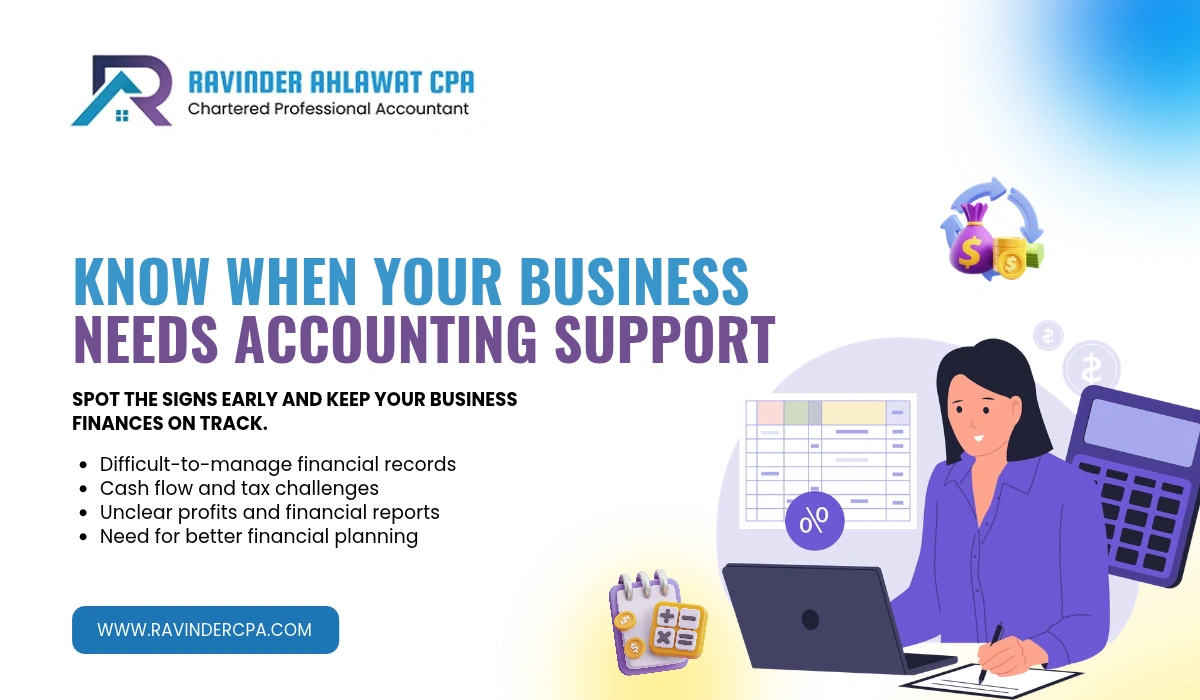
Managing a business involves more than generating revenue; it also requires accurate financial records, effective cash flow management, tax planning, and informed decision-making. As a business grows, these responsibilities can become more complex and time-consuming.
Ravinder Ahlawat, CPA, serving businesses in Mississauga, Brampton, and Toronto, can be considered in the context of understanding professional accounting support and its role in maintaining financial clarity. Recognising the signs that your business may need accounting assistance can help you address financial challenges early and plan for sustainable growth.
1. Your Financial Records Are Becoming Difficult to Manage
Accurate financial records are essential for understanding a business’s financial position. As transactions increase, tracking income, expenses, invoices, and payments can become more complicated. Disorganised records may lead to missing information, reporting errors, or delays in preparing financial statements.
Professional accounting support can help businesses maintain organised records and monitor financial activity more effectively. Regular bookkeeping and financial reviews also make it easier to identify unusual expenses, assess profitability, and prepare for tax deadlines. If managing accounts is taking time away from daily operations, it may be time to review your bookkeeping and accounting services.
2. Cash Flow Problems Are Affecting Daily Operations
Cash flow is one of the most important aspects of business financial management. Even a business with steady sales can experience difficulties if customer payments arrive late or operating expenses increase unexpectedly. These challenges can affect the ability to pay suppliers, cover wages, purchase inventory, and meet other financial commitments.
Common warning signs include:
- Frequently delaying supplier payments.
- Struggling to cover regular operating expenses.
- Depending on short-term borrowing to manage everyday costs.
- Having limited funds available for unexpected expenses.
Monitoring cash flow regularly can help identify potential shortages before they affect business operations. Reviewing payment schedules, tracking outstanding invoices, and preparing realistic budgets can also improve financial planning. Learn more about corporate tax planning strategies and how financial planning can support cash flow management and business stability.
3. Tax Filing and Compliance Are Becoming More Complicated
Business tax responsibilities can become more demanding as revenue increases, employees are hired, or business activities expand. Keeping track of deductible expenses, supporting documents, payroll information, and applicable filing deadlines requires careful organisation. Missing information or making errors in tax records may lead to delays, additional work, or potential penalties.
Businesses operating in Canada may have different tax responsibilities depending on their structure, activities, and circumstances. Maintaining accurate records throughout the year makes it easier to prepare the information required for tax filings and respond to questions about financial transactions. Professional tax and accounting guidance can help business owners understand relevant obligations, organise documentation, and prepare for tax deadlines more effectively.
Explore tax preparation and planning services to learn more about managing business tax responsibilities and keeping financial records organised.
4. Your Business Is Growing Faster Than Your Financial Systems
Business growth often brings higher sales, more transactions, additional employees, and increased operating costs. Accounting methods that worked when a business was small may no longer provide enough detail to manage these changes effectively. Without suitable financial systems, it can become difficult to monitor expenses, evaluate performance, and maintain consistent reporting.
As operations expand, business owners may need more structured bookkeeping procedures, regular financial reports, and improved expense tracking. Reviewing accounting systems can help ensure financial information remains accurate and accessible as the business develops. A well-organised process also makes it easier to compare performance across different periods and understand how expansion affects overall profitability.
For businesses preparing to expand or improve their operations, business planning services can help establish financial goals, assess future needs, and create a more structured approach to growth.
5. You Struggle to Understand Financial Reports
Financial reports provide important insights into a business’s revenue, expenses, assets, liabilities, and profitability. However, understanding these figures and using them to make informed decisions can be challenging without the right financial knowledge. If you find it difficult to interpret your business accounts, you may overlook important trends or potential financial issues.
Understanding financial reports can help you:
- Track business profitability: Identify whether your business is generating sufficient returns.
- Monitor expenses: Recognise rising costs and areas where spending needs attention.
- Evaluate financial performance: Compare results over time and measure progress towards business goals.
- Plan future investments: Use financial information to assess expansion opportunities and upcoming expenses.
Regular financial reviews help business owners understand their financial position and make decisions based on accurate information. Professional accounting guidance can also help explain complex financial data, making it easier to identify areas that require attention and plan for sustainable business growth.
Learn more about accounting services and financial reporting to understand how organised financial information can support better business decisions.
6. Your Business Expenses and Profit Margins Are Unclear
Knowing how much money your business earns is important, but understanding how much it retains after expenses is equally essential. If costs are not recorded or reviewed consistently, it may be difficult to identify where money is being spent and which activities contribute most to profitability. Small expenses can accumulate over time and affect the business’s financial position.
Regular expense tracking helps separate different types of costs, identify unusual spending, and compare actual expenses with planned budgets. Reviewing profit margins can also show whether rising operating costs are affecting earnings. With accurate financial records, business owners can assess spending patterns, evaluate pricing decisions, and identify areas where costs may need closer attention.
Regular financial reporting and budgeting can help businesses identify changes in operating costs and make more informed decisions about spending. Accounting and bookkeeping support can help maintain organised records for reviewing expenses and business performance.
7. You Need More Reliable Financial Planning for Future Growth
Making plans to hire employees, purchase equipment, open another location, or expand services requires a clear understanding of your business’s financial position. Decisions based only on current sales or assumptions about future income can create financial pressure if expenses are underestimated or cash flow changes unexpectedly.
Effective financial planning helps business owners evaluate opportunities, manage resources, and prepare for future costs. Important areas to review include:
- Budget preparation: Set realistic spending limits and allocate resources according to business priorities.
- Cash flow forecasting: Estimate future income and expenses to identify potential financial shortfalls.
- Investment planning: Assess whether your business can afford new equipment, additional staff, or expansion.
- Financial performance reviews: Compare actual results with business goals to identify areas that need improvement.
- Risk management: Prepare for unexpected expenses and changes in revenue that could affect operations.
Regular financial reviews can help you make informed decisions and establish realistic growth targets. For businesses in Mississauga, Brampton, and Toronto, organised financial planning can provide greater visibility into future financial needs and help support sustainable business development.
Explore business planning services for information on financial forecasting, growth planning, and preparing for future business requirements.
Get Professional Accounting Support for Your Business
Not sure whether your business needs professional accounting support? From managing financial records and monitoring cash flow to handling tax obligations and planning for future growth, having the right financial processes in place can make business management more organised. Ravinder Ahlawat, CPA, serves businesses and individuals across Mississauga, Brampton, and Toronto, helping them understand their accounting needs and manage their financial responsibilities with greater clarity.
Contact the team at 905 247 8001 or ravinder@ravindercpa.com to learn more about CPA accounting and tax services and how professional guidance can support accurate financial reporting, tax preparation, and informed business decisions.